“How much should I spend on ads?” is the question every business owner asks before launching a campaign, and the honest answer is: it depends. Costs change by industry, competition, location and how well your campaigns are set up.
This guide explains what drives pricing, where your budget actually goes, and when it makes sense to hire help.
What Drives Google Paid Ads Cost
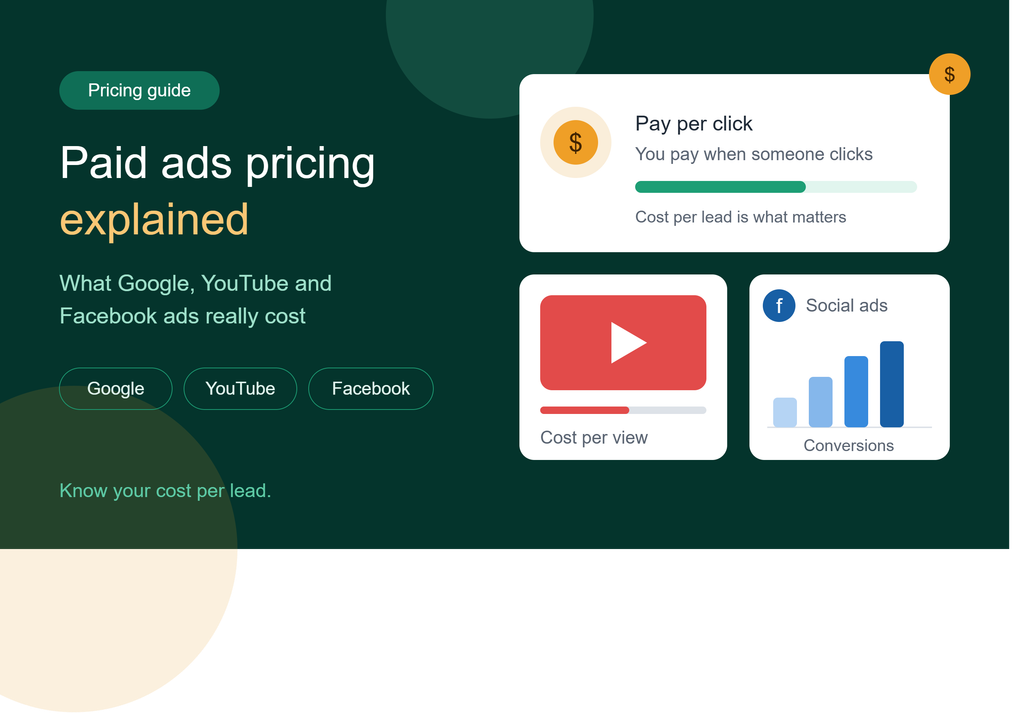
When people research google paid ads cost, they usually find a wide range with no clear answer. That’s because you don’t pay a fixed price. You pay per click, and each click is priced through an auction.
Three things move the price most:
- Competition: More advertisers bidding on the same search term pushes the price up.
- Quality: Relevant ads and fast, useful landing pages can lower what you pay.
- Intent: Searches that signal a readiness to buy usually cost more than general research queries.
Understanding google ads pay per click basics helps you set realistic budgets. You set a daily limit, choose your keywords, and Google shows your ad to people searching for them. You’re charged only when someone clicks.
Reading Google Pay Per Click Pricing Properly
Looking up google pay per click pricing gives you averages, but averages can mislead. A low cost per click means little if those clicks never turn into customers. The number that matters is cost per lead or cost per sale.
Before you commit a budget, work out:
- What a new customer is worth to you
- How many clicks it usually takes to win one
- The most you can afford to pay for each customer
Once you know these, you can judge whether a campaign is working, whatever the cost per click happens to be.
YouTube: Video With a Different Cost Model
Video suits businesses that need to explain a product or build trust. With youtube paid ads, pricing often depends on views or impressions rather than only clicks, so a campaign can be cheap per view yet expensive per sale if your targeting is off.
Start small. Test a few short videos, watch how long people stay, and put more budget behind the one that holds attention.
Facebook and Instagram Ads
Social ads reach people before they start searching. A good facebook ads agency builds audiences, tests creative and retargets visitors who didn’t buy the first time. Ask them how they decide between conversion and awareness goals, because that choice affects both cost and results.
Should You Hire Help?
Running ads yourself works at small budgets. As spend grows, mistakes get expensive, and that’s when outside support starts paying for itself.
Specialist ad management: ppc marketing companies focus on search and shopping ads. They handle bidding, keyword research and ad testing every week, which is hard to do alongside running a business.
Cross-channel support: A paid media agency manages several platforms together, so your budget moves to whichever channel performs best instead of being split evenly by guesswork.
Measurement: If you’re unsure which ads actually produce sales, a google analytics agency can set up proper tracking so you see what happens after the click.
Long-term growth: A growth marketing agency or a digital growth agency looks beyond ads. They test your offer, website, email and funnel, with the aim of increasing revenue rather than just traffic.
Questions to Ask Before You Hire
- How will you report results, and how often?
- Is your fee separate from ad spend, or included?
- Who owns the ad accounts and data if we part ways?
- What results have you achieved for similar businesses?
Final Thoughts
There’s no single price for advertising, only a price that makes sense for your margins. Start with your customer’s value, test with a modest budget, track real results, and scale what works. If you bring in an agency, choose one that is open about fees and happy to show you the numbers.